
Stabilising Performance in Funded Learning Providers
Clarity on the signals that matter — and the decisions that follow
A focused sprint for leadership teams navigating retention, progress and funding pressure
Why performance still feels unpredictable
Performance is being reviewed constantly.
Retention dashboards.
Learner progress tracking.
Withdrawal patterns.
Leadership teams are looking closely at the data.
Yet performance still feels less predictable than it should.
One programme stabilises.
Another begins to drift.
Interventions are introduced.
Processes are adjusted.
Delivery teams respond quickly.
Sometimes things improve.
But the same patterns often reappear elsewhere.
The issue is rarely effort, visibility, or commitment.
It is the absence of a clear framework for identifying which problems genuinely affect funding stability — and which decisions will move the needle
Early Warning Signals Often Appear First
Retention begins to fluctuate across programmes
OOF exposure gradually increases
Learner progress visits fall behind schedule
Withdrawal patterns become harder to predict
These signals rarely appear suddenly. They accumulate quietly before funding impact becomes visible.
How performance issues develop across organisations
Performance instability is rarely caused by a single issue.
It develops through how problems are defined, how responses are selected, and how actions are implemented across teams.
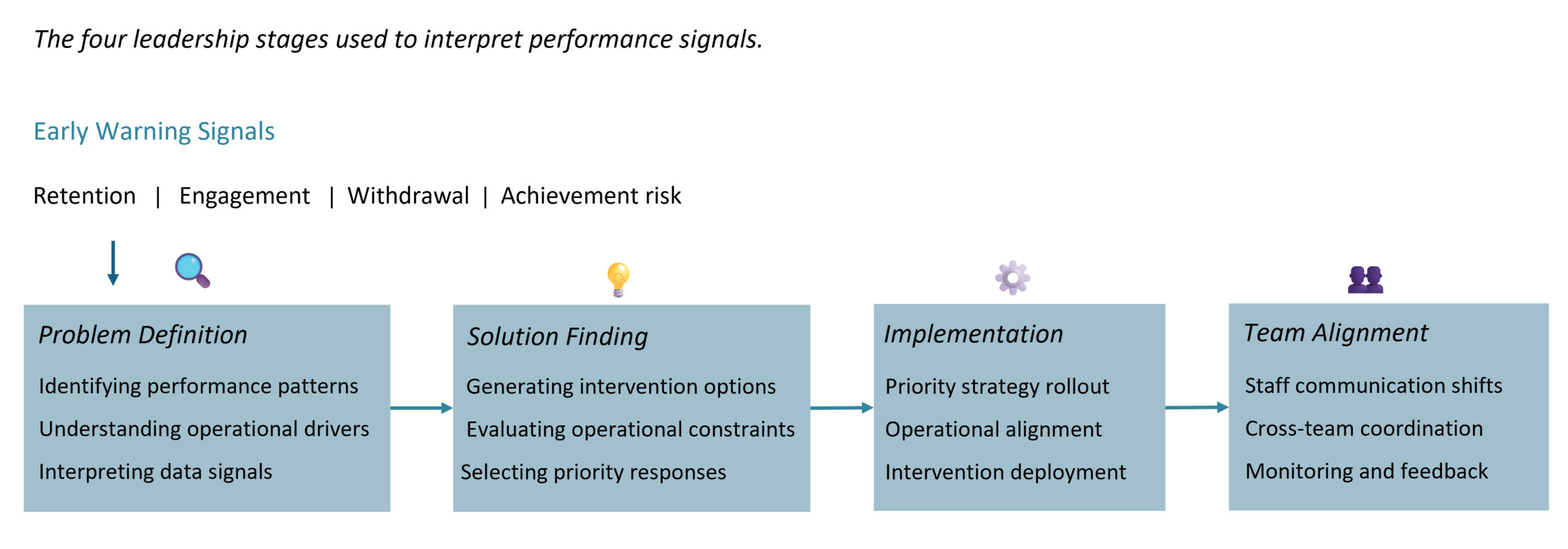
Data Visibility Does Not Always Create Strategic Clarity
The issue is rarely a lack of data. It is a lack of shared clarity on what the data is actually saying.
Most providers now have access to significant operational data including:
• Retention dashboards
• Learner engagement monitoring
• OOF tracking
• Achievement projections
Yet leadership teams still face a critical question:
Which signals genuinely influence funding stability?
Without a framework for interpreting performance signals, organisations often remain reactive rather than proactive.
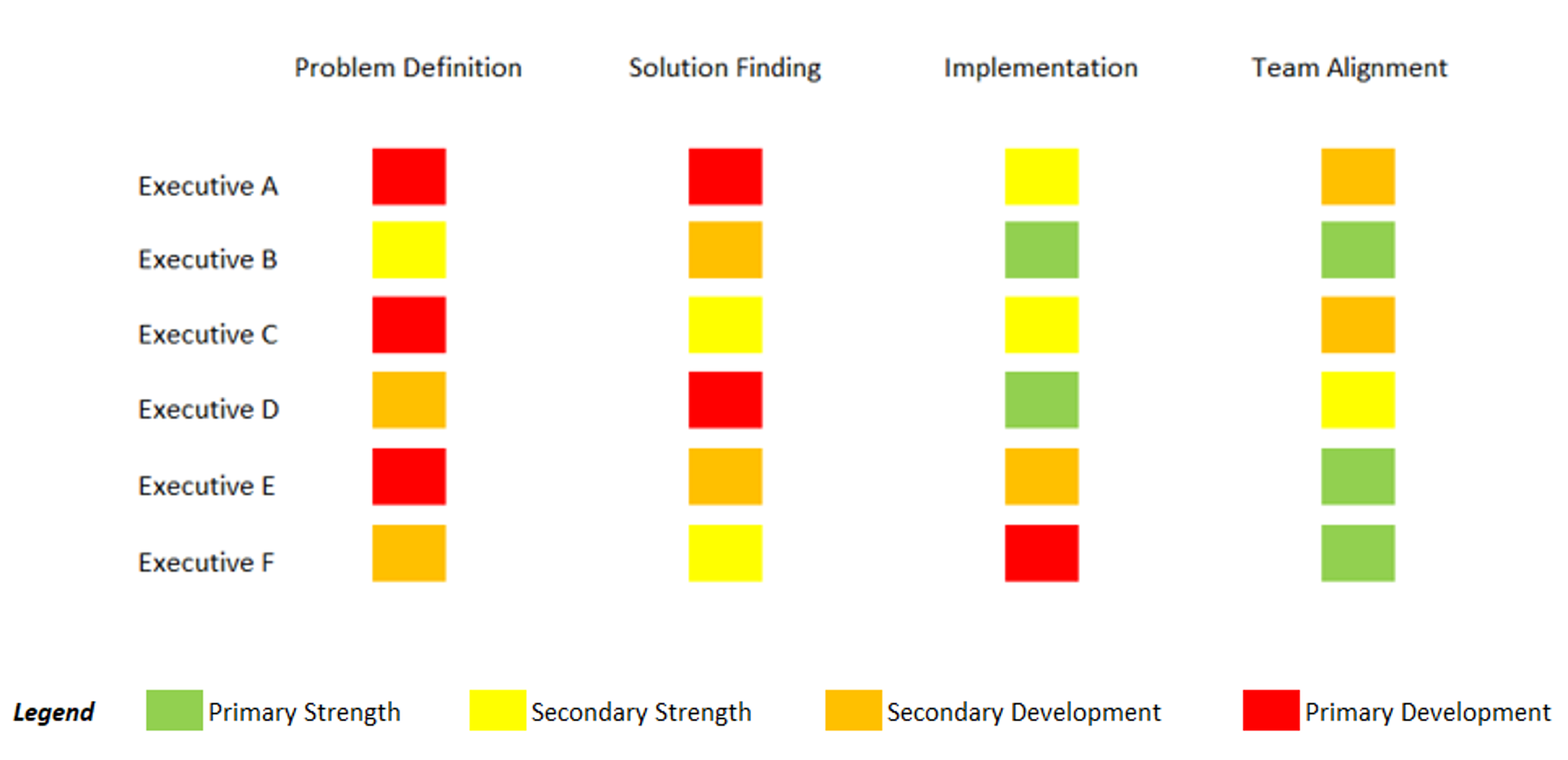
The Funding Stability & Performance Sprint
The sprint is a structured three-week executive engagement designed to help leadership teams strengthen performance predictability.
Week 1
Performance Visibility & Leadership Insight
Review organisational performance indicators including retention, learner progress, OOF exposure and withdrawals.
Leadership thinking diagnostics highlight how decision-making patterns influence operational outcomes.
Week 2
Executive Problem Solving
Leadership teams apply insights from the diagnostic to live organisational challenges, identifying the structural drivers behind performance volatility.
Week 3
Strategic Performance Roadmap
The executive team defines priority problems affecting funding stability and establishes a practical roadmap for addressing them.
Restoring leadership confidence
-
Less time spent reviewing the same data
-
Clearer focus on what actually matters
-
Reduced debate across leadership teams
-
Greater confidence in decisions being made
-
Leadership attention directed where it has impact
What Changes After The Sprint
-
Less time spent reviewing the same data
-
Clearer focus on what actually matters
-
Reduced debate across leadership teams
-
Greater confidence in decisions being made
-
Leadership attention directed where it has impact
If these are the outcomes your leadership team is looking to achieve, the next step is a confidential executive conversation.
Case Example
A real example from a funded learning provider illustrates the scale of impact.
In one funded learning provider managing approximately 1,500 learners, identifying the underlying performance patterns led to measurable improvements in funding stability and organisational growth.
Within twelve months:
-
- OOF exposure reduced from over 45% to under 10%
- Funding stability significantly improved
- Organisational turnover increased from £1m to £5m
This outcome was not achieved through additional reporting or monitoring.
It came from clarifying which problems leadership needed to solve first.
Who This Is For
The Sprint is designed for senior leadership teams in funded learning providers, typically involving:
It erodes.
-
- Managing Director / CEO
- Delivery leadership
- Learner engagement leaders
- Employer engagement leaders
- Recruitment leadership
The organisations that benefit most are not failing providers.
They are strong providers seeking greater performance predictability before volatility becomes financial exposure.
About Us
Andrea Burns and Toni Eastwood work with senior leaders in funded learning providers to strengthen performance stability, protect funding, and improve organisational clarity.
Between them they bring decades of experience across funded learning provision, leadership development, and commercial strategy.
Their work focuses on helping executive teams understand the deeper patterns behind performance volatility — particularly where retention, learner engagement, and leadership decision-making begin to affect funding predictability.
Toni Eastwood OBE MBA,
Leadership & Executive Coach


Andrea Burns, Founder
Catapult Solutions
A Conversation, Not a Commitment
Most CEOs first explore the Sprint through a short conversation about the performance patterns they are currently seeing inside their organisation.
During this discussion we typically explore:
-
- current performance signals in your organisation
- areas where funding predictability feels uncertain
- whether the Sprint would be a useful intervention
If it is not the right fit, we will say so.
But if the patterns you are seeing reflect the same dynamics experienced by many funded providers, this conversation often becomes the first step toward restoring strategic clarity.
Confidential, strategic conversation — no obligation
Availability is intentionally limited to protect focused executive time.